


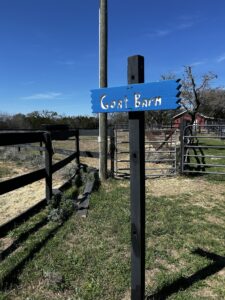
At the UT Charter School Pathfinders campus, located at the Burke Center for Youth in Driftwood, learning often happens far beyond the classroom walls. Located on a real ranch with an impressive new greenhouse, students gain real-world experience in vocational education and responsibility. But among the ranch’s most impactful programs, none is as beloved, or as demanding, as the campus’ thriving goat program.
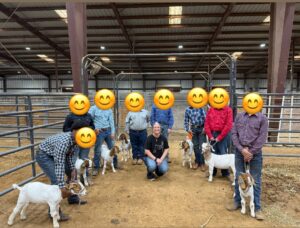
Led by teacher Stacy Grona, the program offers up to ten students the opportunity to raise, train, and show goats through a 4H program at the annual Hays County Livestock Show. It’s work that is rigorous, rewarding, and, according to the boys who care for their animals, well worth it.
A Teacher Who’s Walked the Walk
Ms. Grona brings deep agricultural roots to the classroom. As an FFA participant, she showed pigs throughout high school and then worked with pigs while she earned her degree in agricultural education from Tarleton State University. Her passion for vocational learning is matched only by her belief in what her students can accomplish.
“The goats are quasi‑feral when we get them,” she explained. “The boys learn patience with themselves and the animal. The calmer you are, the calmer the goat will be.” With her guidance, students learn not just animal science, but perseverance, teamwork, and pride.
A Program That Pays—Literally and Figuratively
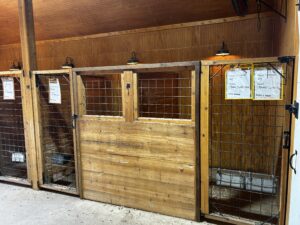
Each year, a local breeder donates young female goats to the boys. From there, the students take full responsibility, feeding and watering their animals, cleaning pens, and training the goats. Two students, AG and AH, were candid about their initial motivation to join the program.
“We get paid,” they admitted with a grin. And it’s true: when their goats are sold at the Hays County Stock Show, the proceeds are placed in a trust. When the boys leave the ranch, they receive the earnings they worked so hard to earn.
But money isn’t the only thing they walk away with.
From Quitting to Leading
Ms. Grona sees the transformation each season. “They take pride in what they are doing,” she said. “They gain confidence in themselves, especially when they see their work come to fruition.” Showing a goat requires skill and precision. Students learn how to position the animals to highlight muscle definition for potential buyers—an exercise in patience, technique, and attention to detail.
For returning student AG, now in his second year, the work has been a real test of perseverance. “It is not easy caring for the goats,” he said. “I wanted to quit. I decided to stick with it, like the guitar, it takes practice.” AH added: “At first, it was frustrating. But you have to think of the end result.” AH added, “It ended up being fun.” This year, AG serves as a guide for first-year participants, stepping into a leadership role built on his experience and success. He has learned from his success; his goat placed at the Hays County Livestock Show.
Learning Beyond the Classroom
Scientific and mathematical concepts come to life for students in this program. The boys see firsthand how diet and exercise influence growth and development, applying the scientific method as they track each goat’s weight gain and muscle improvement to meet their goals. They also learn the basics of animal health, including how b
acteria, parasites, and viruses spread and, most importantly, how to prevent them. It gives the boys a practical understanding of microbiology and disease prevention.
Whether a goat places of not, students leave with something harder to measure than a ribbon or a paycheck. They leave knowing they committed to doing something difficult and saw it through. They develop life skills including communication and teamwork, time management, personal responsibility and planning. These are things that they carry with them long after they leave the ranch.
Each UT Charter campus is unique. Our partner facilities are deeply rooted in their communities, and each campus benefits from those strong connections, creating learning environments that are supportive, engaging, and rich with opportunity.