


When the National Alternative Education Association (NAEA) convened its annual conference in October 2025, UT University Charter School (UTUCS) took center stage to present “Strategies for Supporting Students with Special Services in a Virtual Setting.”
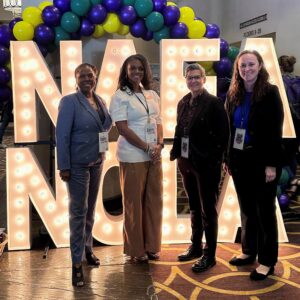
Superintendent Nicole Whetstone, Success Coach Ashley Johnson, Special Programs Director Janina Roberts, and Academic and Professional Development Director Veronica Ruiz-Winner presented a session that drew on real student stories, research-backed frameworks and the school’s solid experience serving some of Texas’ most vulnerable students at 24 campuses.
Although UTUCS is not the first to develop a virtual program for alternative education, it is unique in its “wrap-around” services that support the whole child.
“Sometimes kids go online and don’t get all of the support they need,” said Whetstone. “We want to make sure Individualized Education Programs ( IEPs) are met, that we’re still doing whole-child wrap-around services — that students aren’t falling through the cracks just because they’re learning virtually.”
The services are designed to address not just a student’s academic need, but their social, emotional and physical well-being. Roberts described the continuum of services the school provides including speech and occupational therapy, counseling, inclusion support and instructional facilitation.
Success Coaches like Ashley Johnson play a particularly distinctive role. Every student receives regularly scheduled weekly check-ins where coaches monitor academic progress, facilitate meaningful goal-setting and connect students to the broader support network around them.
“This is what sets us apart from the rest,” said Ruiz-Winner. “These layers of support reflect UT Charter’s commitment to building strong relationships, fostering student confidence, and ensuring every learner feels seen, supported, and empowered to succeed.”
Additionally, social worker Andrea Menchaca works with administrators and teachers to connect students and families with resources addressing social, emotional, and overall well-being, a vital role for students navigating instability outside the classroom.
The presenting team organized their presentation around the 5-C’s Framework: Control, Curriculum, Climate, Caring Community and Connection. Using two detailed case studies including a 14-year-old who had attended eight schools in six years while in foster care and a 13-year-old who managed a significant health condition. They discussed how this framework translates into real, individualized plans for students who need far more than a standard online course.
The team explained that IEP adaptations in the virtual setting require intentional modifications such as reviewing and updating goals for the digital environment, identifying assistive technology needs, establish clear communication protocols with families and using data that may include learning management system analytics, weekly progress reports and student self-assessments to monitor progress and make adjustments.

According to Dr. Whetstone, UTUCS expects to graduate 20 students from the online program this year and will combine the ceremony with UT High School so students can have the option to walk across the stage and celebrate their achievement in person. She sees virtual learning as one of the school’s most exciting growth areas, particularly its role as a transition bridge for students returning from residential or treatment placements to traditional school settings.
“Usually there is a large team around one student because they are likely navigating mental health challenges, they’ve been out of school for a while, or they’ve been in treatment,” said Dr. Whetstone. “We want to make sure they aren’t losing credits. Online is the transition.”
The virtual school is only in its second year. Currently 176 students are enrolled—more than double last year—and continuously growing. As Ruiz-Winner has previously said, “We now have a large group of kids that are gifted, talented, have the skills, knowledge, want, and will, but they just need to learn slightly differently. UT Charter Schools’ programs offer hope that every learner can find their path to success.”